Man is our list ever getting short!
We've just got a few things left to do before winter hits hard in Alaska.
When we went on book tour, it really put a huge amount of stress on us to get as much done as possible while we can work and still feel our fingers at the same time. Numb fingers are no fun. Working at 50 degrees is a totally different story than working at -50 degrees.
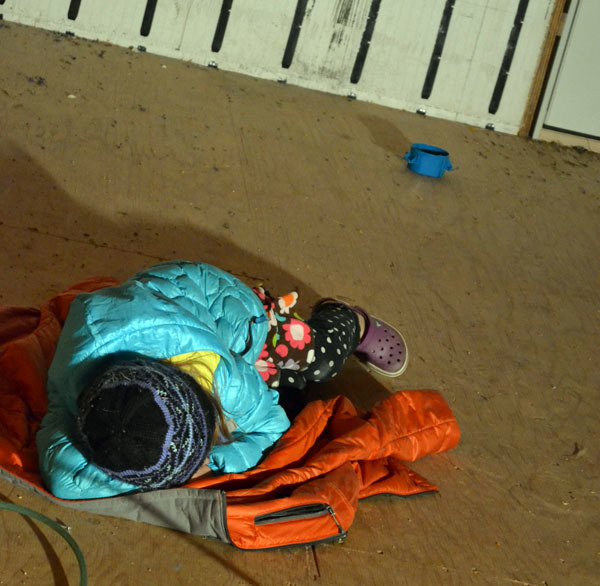
There was a lot of this going on as we worked late - even on school nights - trying to get as much done as possible before leaving Alaska.
The big goal is having the "lid" or upstairs ceiling insulated. To get to this point, we have left to do:
- Run electrical boxes and wiring in the ceiling
- Frame in and put the chimney through the roof
- Vapor barrier the upstairs ceiling
- Hang drywall on the upstairs ceiling
- Blow insulation in the upstairs ceiling
We actually got all but the last two done before leaving for the book tour!
Here's how we did the electrical:
It starts with constant battle of design vs functionality. Up here in Alaska, it's different. We'd love to do can lights in the ceiling. But every light box in the ceiling is one more opportunity for warm air to sneak out, as heat rises. And with heating fuel upwards of $4.00 a gallon, lost heat can literally add up to big fat Benjamins floating out your ceiling. It's better to not put big huge holes in your ceiling.
As much as I wanted to do recessed lighting, we settled on surface mount ceiling lights.

Mom really likes the lights we DIYed last winter in our great room, so we could always go back and do something like that as well.
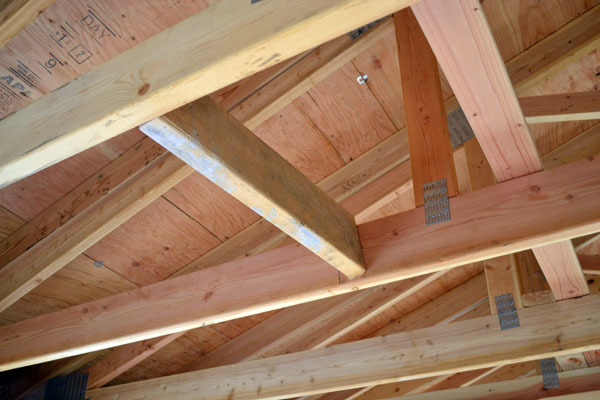
We decide on two lights in the great rooms, one light over the dining table, one over the kitchen sink, one main kitchen light, one pantry light, one entryway light, one hallway light, and then lights in each bedroom and closet. Of course the bathroom has the fan/light combo installed and we'll add the vanity light in the wall.
For each light, additional boards have to be added to the ceiling to get the lights in just the right spot. I'm weird about the dining chandelier being exactly center over the dining table, or the hallway light being exactly in the center of the hallway.
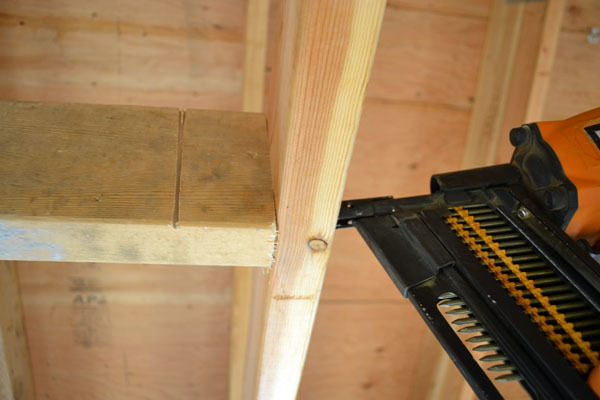
The blocking just gets nailed up between the trusses.
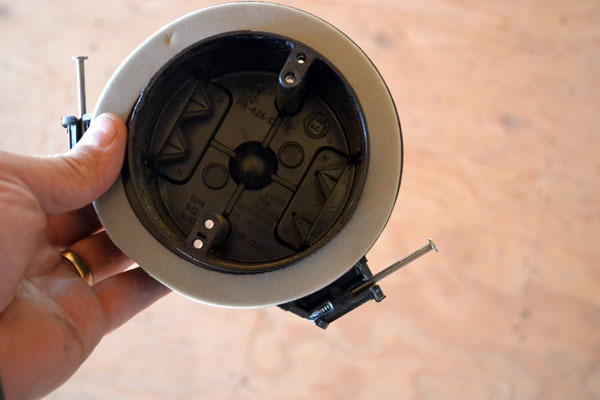
This is the ceiling electrical box.

It has a seal on it to prevent warm air from sneaking out.
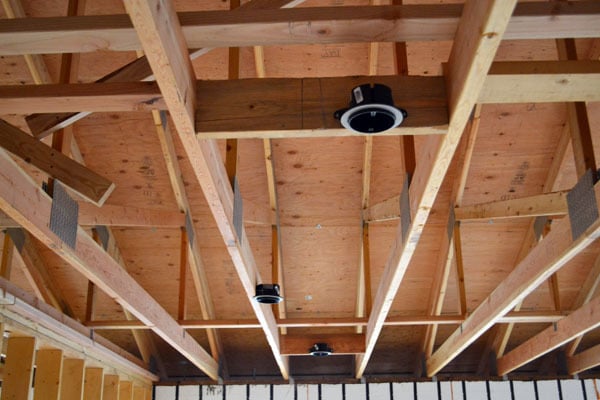
The boxes just get nailed right up to the blocking.
This step is easy. The hard part it determining EXACTLY where the boxes go. As in I must know exactly where the kitchen sink goes, exactly where the dining table will go.
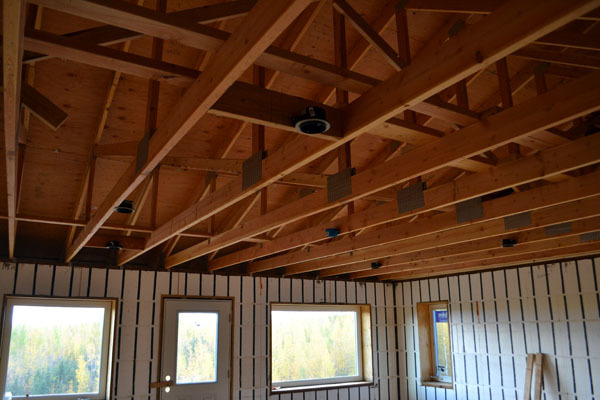
We also put boxes in for fire alarms. If we hard wire them into the house, Mom will never have to worry about fire alarm batteries going dead. Ever.
The fire alarm placement isn't as crucial as the lights, because the fire alarms will be discreet, so we can just nail to the trusses in each of the rooms requiring a fire alarm.
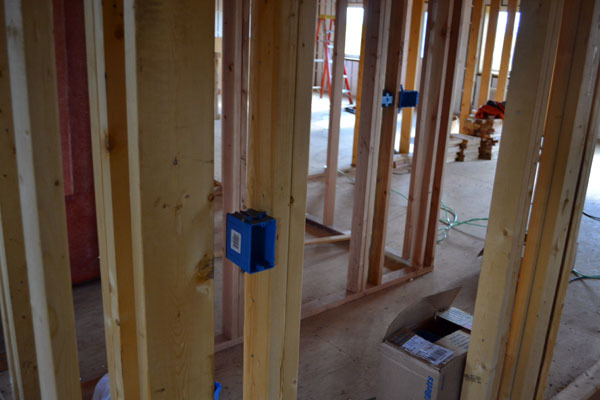
And then to make life easier on us later on .... as in not having to wade through a couple feet of blow in insulation trying to find light boxes ... we are wiring the ceiling lights to their switches. So we figure out where we want switches and mount to walls.

There's alot of switches just because we went the three way switch option in quite a few places. For example, we really wanted Mom to not have to walk all the way downstairs to turn off the entryway light.
With the switches and boxes in, it is time to pull wire!
<img src="http://ana-white.com/sites/default/files/3154817612_1352828897.jpg" width="470px">

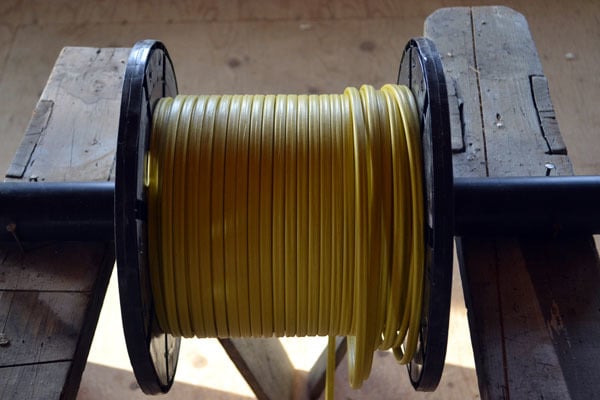
The Ram sets the wire up on a spool by threading the wire through a piece of spare drain pipe, elevating it so just like thread on a sewing machine, the spool spins as he pulls wire. Wire is expensive. You don't want to cut off any more than you need and waste it.
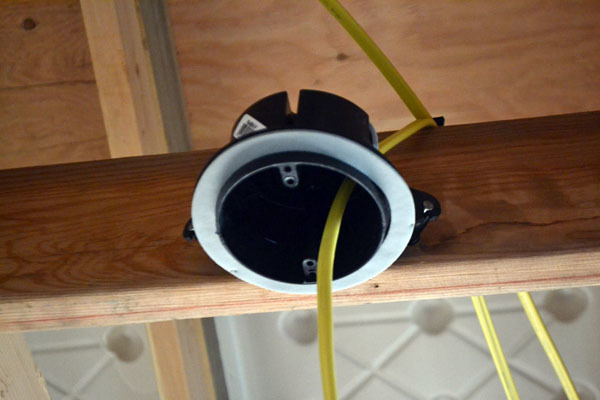
Wire is pulled through the light box ...
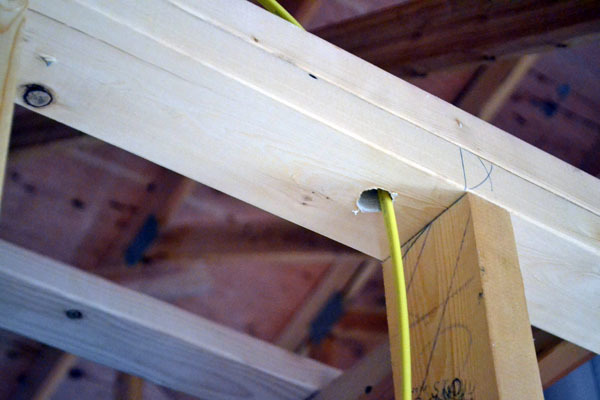
Down through the walls, interior walls when possible ...

Stapled to the walls as it's run down the wall ....
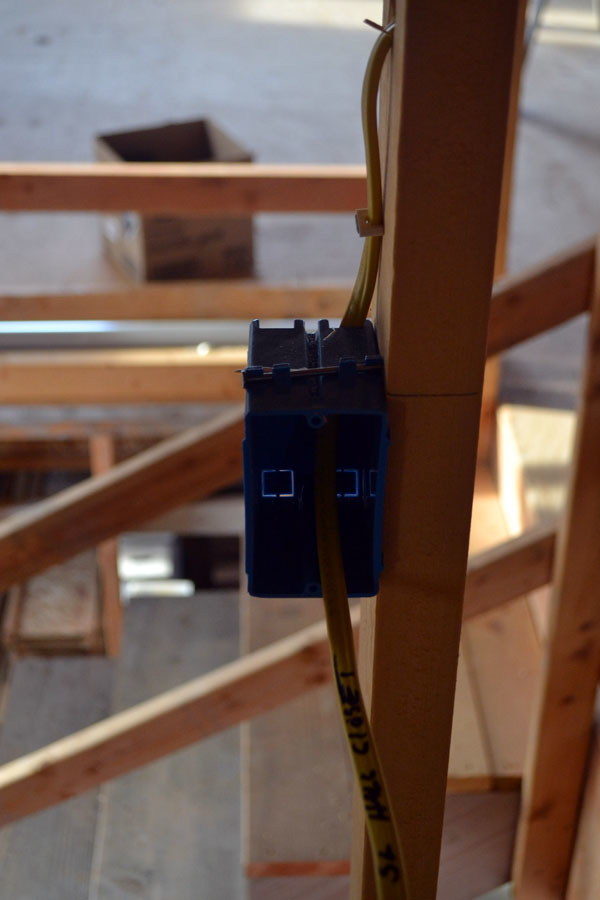
And then out the switch box where it's cut off. Each wire is carefully labeled so when it's time to go back and put switches in, it's not a guessing game. Or at the very least, a metering game.
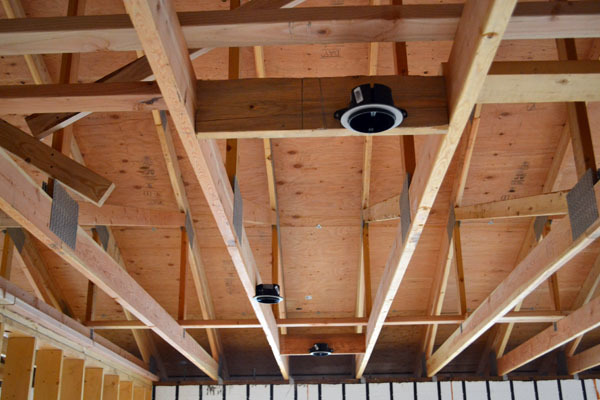
We literally got the ceiling electrical done mere days before leaving for book tour. The next big thing is getting the chimney stack through the ceiling so we can put a heat source in the building to keep us warm through the winter.
Once that's done, the "stuff" in the ceiling is complete, and we can start sealing it up with vapor barrier, the drywall (yes, the D word finally!) and then blow in insulation!
This may be taking longer than we'd have ever thought, but it is definitely moving along!
So tell me, what goes on in your area for heating ceilings? Do you have to compromise on design to prevent precious heat loss? Do you live in a cold weather region and have can lights and they work fine? It's always interesting to hear different perspectives on how things are done!
Comments
Lifesaver2000 (not verified)
Wed, 11/14/2012 - 08:44
Using hard-wired smoke
Kim M (not verified)
Wed, 11/14/2012 - 09:14
Pot/can lights
Guerrina
Wed, 11/14/2012 - 10:32
Great Progress!
Anonymous Coward (not verified)
Thu, 11/15/2012 - 13:37
Heat sneaking IN is just as bad